Inertia





Museum of History St. Petersburg
September 23 - October 22, 2006
Irene Janze (NL)
drawing ‘City Scape Rome’
Kerim Ragimov (RU)
installation
paintings ‘Metro series’
video
Kerim Ragimov and Irene Janze realized an enticing exhibition at the Poterna hall of the Museum of the History of St. Petersburg, which confronted the visitors with different means of visualizing history’s inertia.
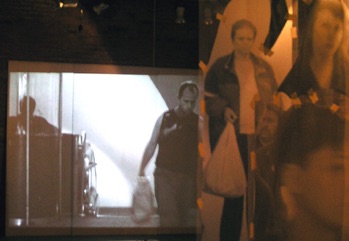
Feeling History’s Inertia
by Erik Hagoort
Is the past gone? Or does history continue in time, just like an object that, following Newton’s notion of inertia, tends to keep on moving once it is in motion? If so, would it be possible to feel history? Can we experience the past as if it were present?
Yes, was the definite answer of the renowned professor in cultural history of the Netherlands Johan Huizinga (1872-1945). Huizinga invented the term ‘historical sensation’ for this experience. But what did he mean? Could artists shine a light on this inertia of history?
In museums we can see numerous depictions of historical battles, abdications, revolutions. Film, photography, video and digital media make it possible to store history, and to look back at it as if we are present again. But Huizinga meant something different by ‘historical sensation’: a highly personal, mysterious, overwhelming, ecstatic feeling of connection with time past. It can happen to anyone unexpectedly, casually even, evoked by the shadow of a building or by a crack in the asphalt showing the old cobbles beneath.
We might come near this sensation when looking at the paintings of Russian artist Kerim Ragimov (1970) and the drawings of Dutch artist Irene Janze (1956). In their works Ragimov and Janze each focussed on the historical experience of public space in cities that have grown into living monuments: St. Petersburg and Rome.
Both artists share the idea that inertia is characterized by continuity of multiplicity: historical sensation is an ongoing experience of multiplicity of time and place.
Metro video and graphic reproductions by Kerim Ragimov
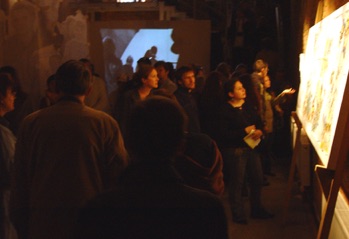
People watching ‘City Scape Rome’ by Irene Janze
more about City Scape Rome
more about ‘Metro’ installation

Inertia St. Petersburg 2006
for Inertia in Amsterdam 2008 click here